
Australian home EV charger cost guide
EV charger installation cost in Australia: what changes the price?
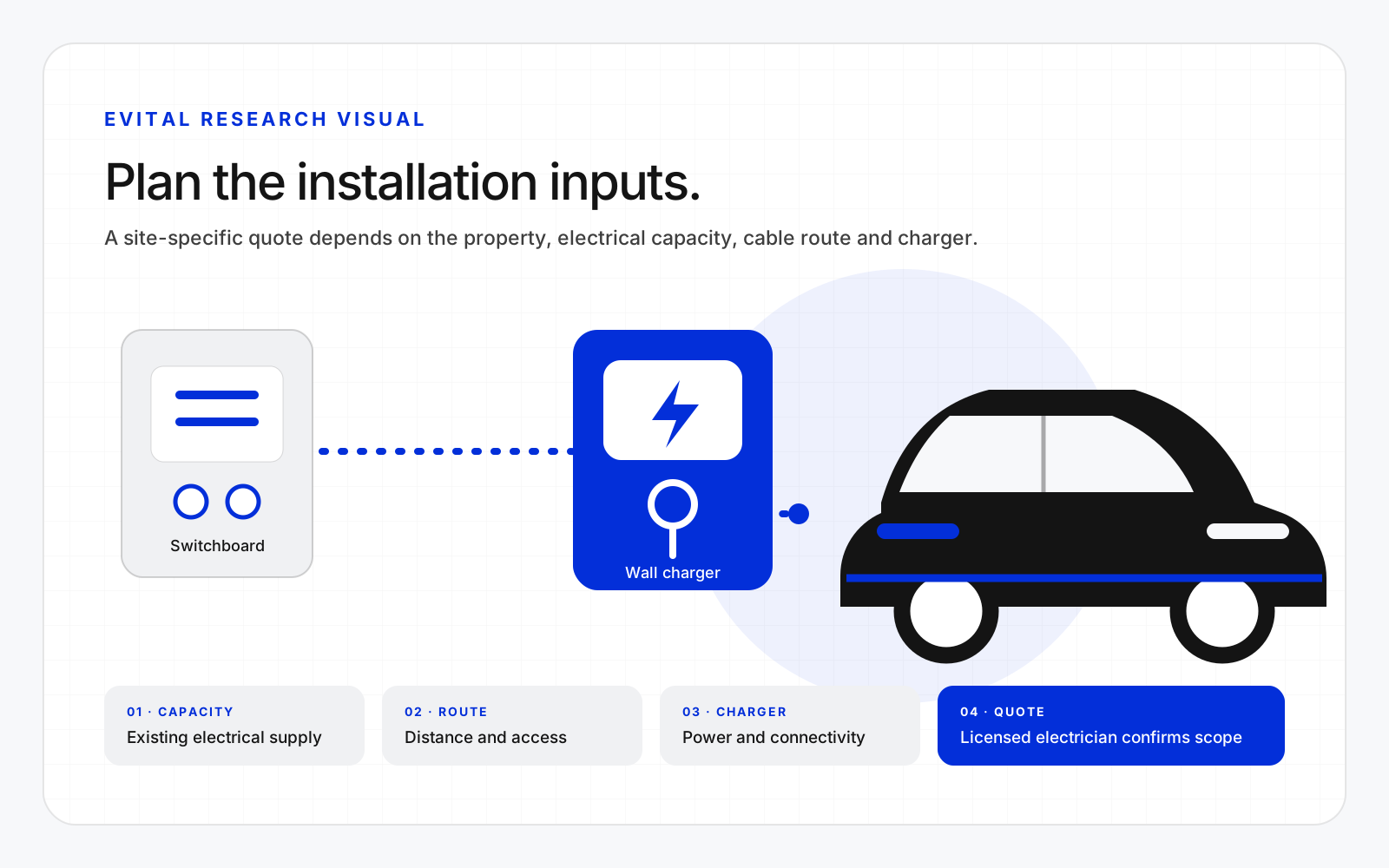
A home EV charger is not a single fixed-price product. The final installed cost depends on the charger, the distance from the switchboard, circuit protection, electrical capacity, cable routing, load management, solar integration and whether the property needs electrical upgrades. A simple installation can be relatively straightforward; a complex home or strata installation can be materially more involved.
2026 price context
A basic Australian home charger installation commonly starts in the low thousands
As a current market reference, RACV says a basic 7 kW single-phase home charger with straightforward installation can cost around $1,400 to $2,500, while more complex installations with longer cable runs, smart solar integration or load-management features can exceed $3,500. Treat those figures as an example rather than a national quote because property conditions vary.
The Australian Government does not prescribe a standard installation price. It recommends using a licensed electrician to assess the property and notes that a dedicated home charger may require a switchboard or supply-connection upgrade.
- Charger hardware and included cable
- Licensed electrician labour
- Distance between switchboard and parking space
- Dedicated circuit and protection equipment
- Switchboard or supply upgrades where required
- Solar, battery or smart-load integration
- Testing, certification and commissioning
7 kW vs 22 kW
More charging power is not automatically better value
Australian Government guidance describes dedicated home AC chargers as typically operating from 7 to 22 kW. A 22 kW wall unit generally requires suitable three-phase supply, and the vehicle itself must support the corresponding AC charging rate to benefit from the additional power.
For many households, a 7 kW charger can replenish normal daily driving comfortably overnight. Buying a higher-power charger that the vehicle or property cannot use may add cost without materially changing the ownership experience.
Electrical work
Cable distance and switchboard capacity can dominate the installation quote
A charger mounted beside a modern switchboard is a different job from one installed in a detached garage or apartment basement. Longer cable runs, difficult wall or ceiling access, trenching, protective equipment and distribution-board work can all increase labour and materials.
Ask the electrician to identify any electrical upgrade separately from the charger itself. That makes quotes easier to compare and helps distinguish the cost of the charging hardware from work the property needs to support it safely.
Solar and smart charging
The cheapest installation is not always the lowest-cost charging setup
Smart charging can schedule the EV around lower electricity prices or surplus rooftop solar. Where a household has solar, battery storage or a time-of-use tariff, compatible energy management may create more long-term value than simply choosing the lowest upfront hardware price.
Compare the entire household energy setup. A charger should work with the vehicle, the electrical supply and the tariff strategy rather than being selected in isolation.

Apartments and strata
Strata charging can involve building-level infrastructure and approvals
Australian Government guidance notes that apartment residents may need approval from their strata or owners corporation. Building electrical capacity, metering, billing and future demand can all affect the design.
For a building expecting more EVs over time, load management and an EV-ready distribution approach may be more scalable than installing each charger as an isolated project. Building owners should use appropriately qualified electrical contractors and consider the building insurer's requirements.
Quote checklist
Compare EV charger quotes on the same scope of work
A low headline price can be misleading if it excludes necessary cabling, protection, switchboard work or commissioning. Ask each installer to quote the same scope and identify assumptions.
- Exact charger model and warranty
- Maximum configured power
- Cable run and mounting location
- Circuit protection and isolators
- Any switchboard or supply work
- Solar or load-management configuration
- Testing, compliance documentation and warranty on installation work
Next steps
Continue with the next relevant EV question
These links move you from this topic into the next logical piece of EV research.
EV charger installation cost calculator
Build an indicative Australian installation range from the main property and charger variables.
→Home EV charging guideUnderstand home charging speeds, electrical setup, solar and charging routines.
→EV charging cost AustraliaCompare home, solar, off-peak and public charging cost considerations.
→Common questions
Frequently asked questions
How much does it cost to install an EV charger at home in Australia?
There is no fixed national price. RACV currently cites around $1,400 to $2,500 for a basic 7 kW single-phase charger with straightforward installation, with complex installations potentially exceeding $3,500. Obtain a property-specific quote from a licensed electrician.
Do I need three-phase power for an EV charger?
Not necessarily. Many homes use a single-phase 7 kW charger. Higher-power 22 kW AC charging generally requires suitable three-phase supply and a vehicle capable of accepting that AC rate.
Can an EV charger require a switchboard upgrade?
Yes. Australian Government guidance notes that a dedicated charger may require a switchboard or supply-connection upgrade depending on the property.
Can I install an EV charger myself?
A dedicated home EV charger connected to the home's electrical supply must be installed by a licensed electrician. Use appropriately qualified professionals and follow local electrical requirements.
Keep learning
Related EVITAL guides
Continue with closely related Australian EV information from the same topic cluster.
Next step
Turn the installation guide into a property-specific planning range.
Use the EVITAL calculator to understand which installation variables can move the indicative cost, then continue into home charging guidance.